Darkwaar is an experiment in creating and publishing small playable ideas regularly. The 35th game, Emberwake, explores isometric tactical combat through spatial chain reactions.
The design objective was deliberately narrow: build tactical depth from one universal rule. Every successful attack pushes its target. Reaching an enemy is only the beginning; the direction of the hit and whatever stands behind it decide the real result.
Three heroes, one small battlefield
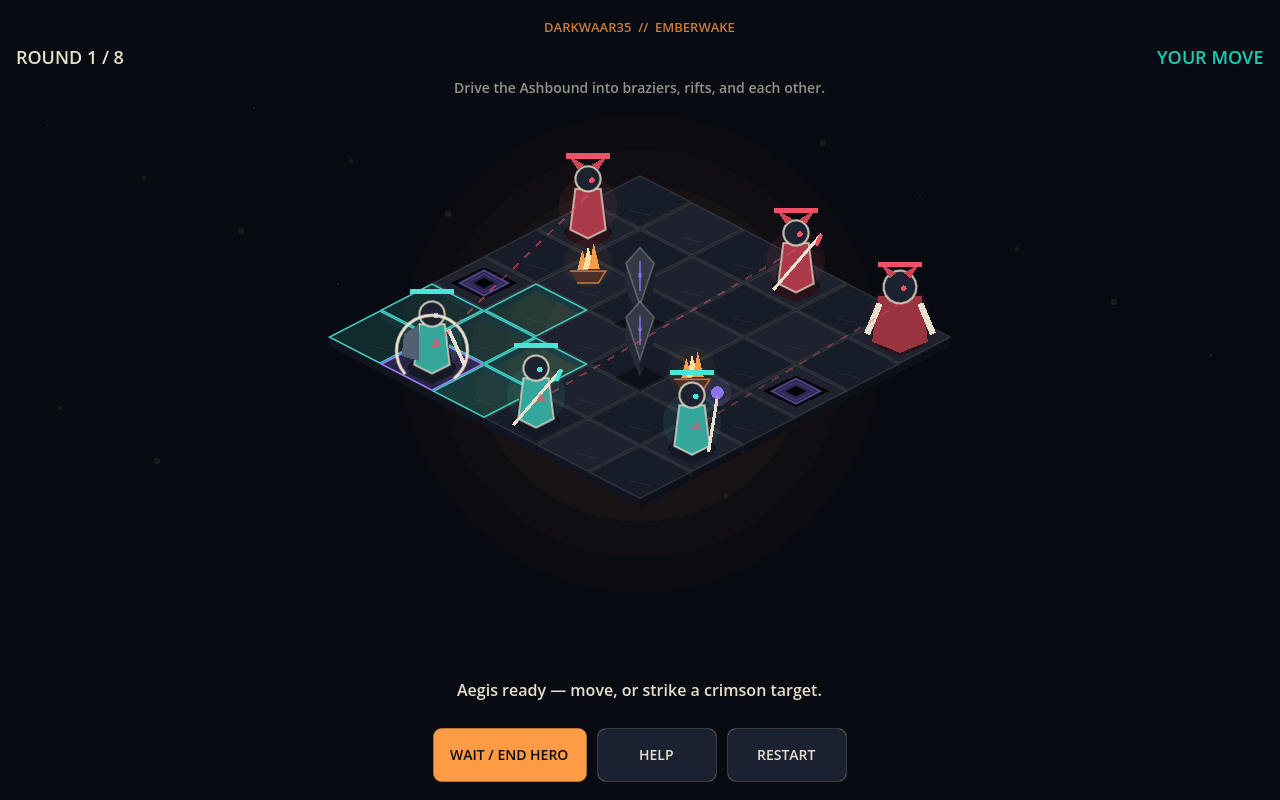
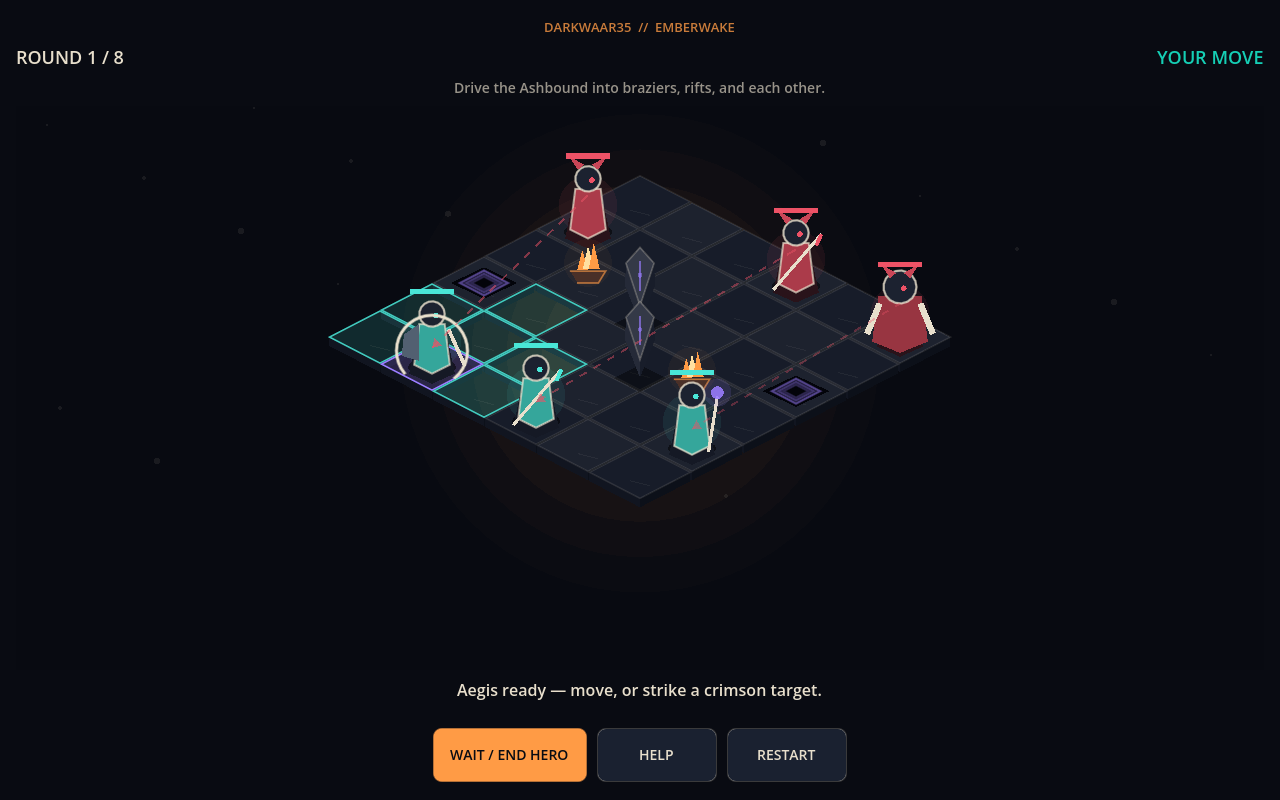
Emberwake is a compact 3v3 encounter on a 6×6 isometric ruin. The three heroes share the same movement rules but control space in different ways:
- Aegis, the Vanguard strikes adjacent cells and holds the front line
- Vesper, the Ranger attacks along orthogonal lanes
- Nyx, the Seer projects attacks along diagonals
Three Ashbound archetypes oppose them with different ranges and priorities. Their next attacks are drawn as crimson intent lines before the enemy phase, turning prediction into part of the board rather than a hidden calculation.
Each hero acts once per round. Select a cyan hero, tap a cyan diamond to move, or tap a crimson target to attack. Wait / End Hero, Help, and Restart stay on screen. Desktop interaction uses the same tap model through touch emulation.
The challenge lasts at most eight rounds. Defeat all three Ashbound before the final enemy phase; lose all three heroes, or let the eighth round close with an enemy standing, and the ruin wins.
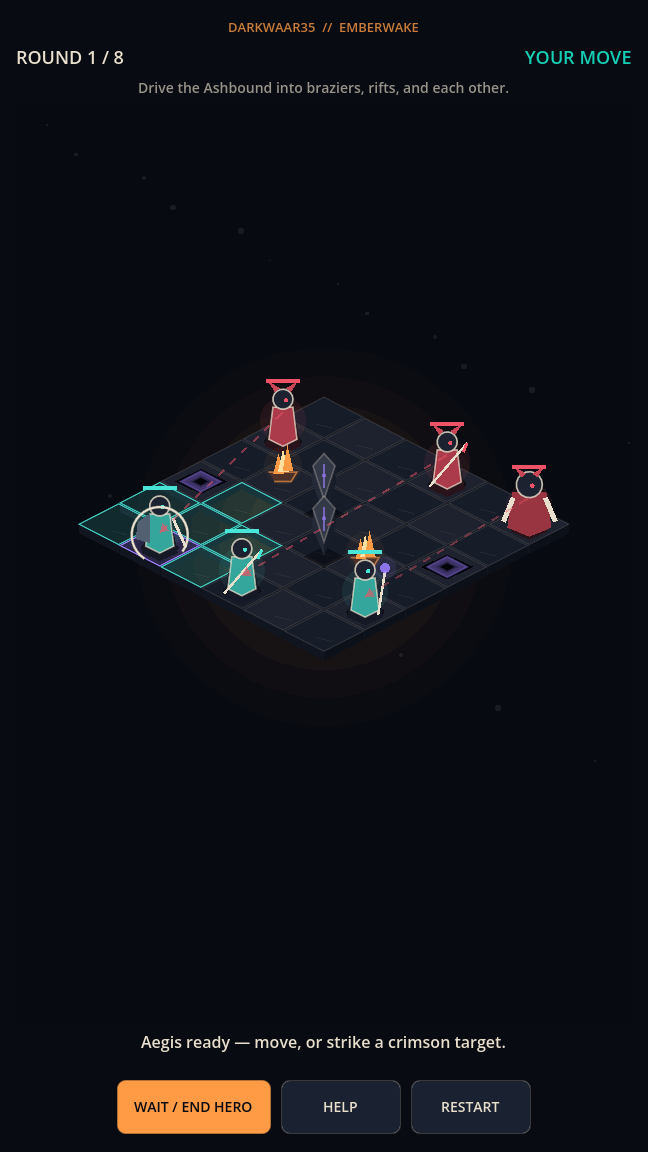
The Wake mechanic
An attack in Emberwake is also a displacement tool. A target pushed into an empty cell changes the formation. A target that cannot move resolves the obstruction instead:
- Stone walls cause collision damage
- Another unit takes part in the collision, hurting both units
- Braziers add fire damage
- Violet rifts are lethal
That single rule links movement, attack direction, collision, fire, and the battlefield edges. A low-damage hit can be decisive when it lines up a rift. A strong attack can be wasteful when it pushes an enemy out of a useful lane. Friendly and hostile bodies can become temporary walls, so a formation is both protection and ammunition.
This is the core of the game: the ability list stays small, but the result of an action depends on geometry. The board produces the combinations instead of a large progression system.
Play Emberwake
Emberwake is a short, replayable encounter about turning a straight attack into a useful wake. Read the threat, shape the line, and make every position matter.