Darkwaar is an experiment in creating and publishing small playable ideas regularly.
Today's game
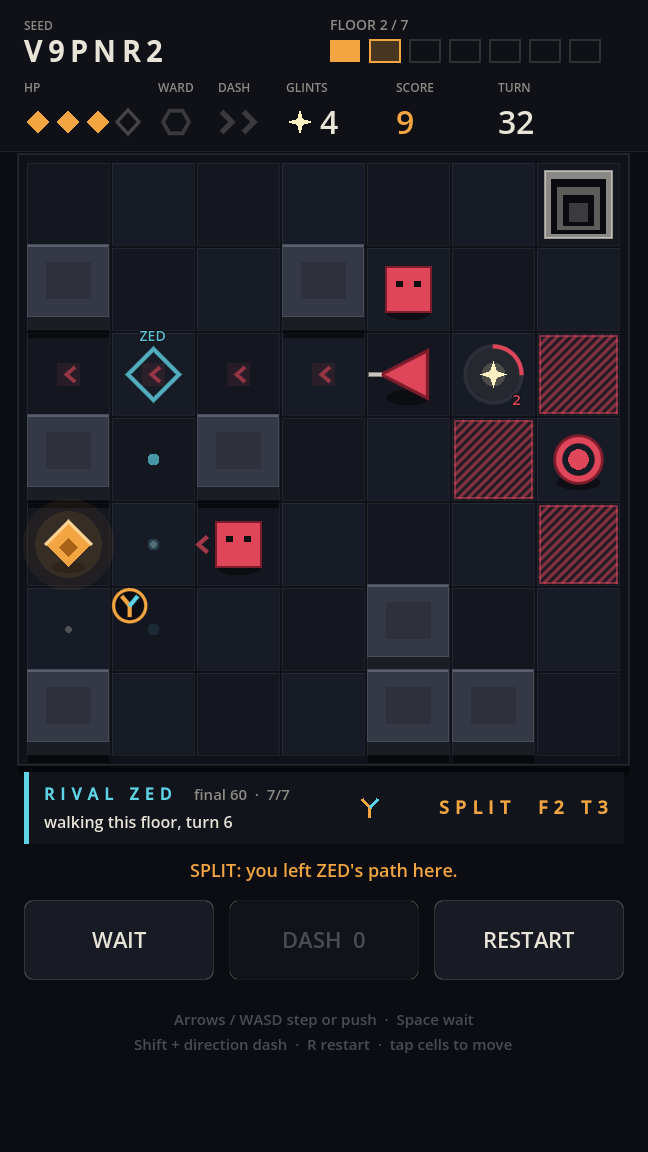
Today's Darkwaar is Seedwake.
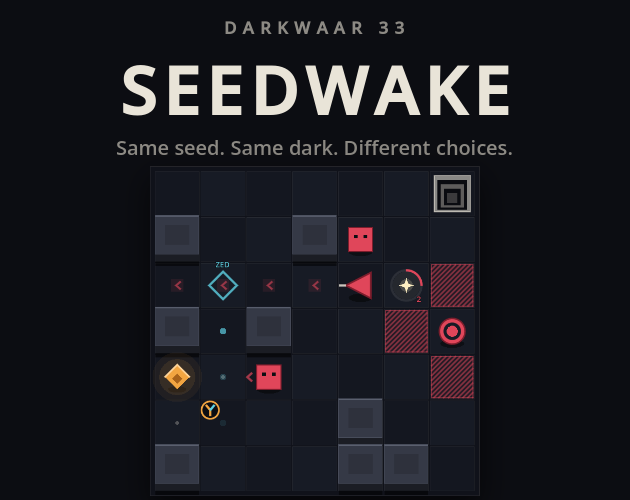
Seven small floors, seven by seven cells each. Everyone who plays the same seed gets exactly the same floors: the same walls, the same enemies, the same glints, the same shrine offers. Nothing is rolled while you play. The only thing that separates two runs is the choices made in them.
Seedwake is a tactical descent about reading the board one turn ahead. Every enemy attack is drawn before you commit to a move, so a hit is never bad luck. It is always a decision that could have gone the other way.
How to play
- Tap a neighbouring cell to step or push; desktop clicks mirror taps
- Walk into an enemy to push it one cell; if a wall, the board edge, or another enemy is behind it, it is crushed
- Hatched red cells are hit after your move: get out of them, or push the attacker so it loses its action
- Brutes chase and strike the cell you stand on, lancers fire down a fixed line every third turn, sentries pulse their four neighbours every other turn, and their attacks hit each other too
- Glints fade; the ring around each one counts the turns it has left
- Reach the stair to clear the floor, then spend glints at the shrine (Mend, Ward, Dash, Long Glow, Second Wind) or keep them
- Score is glints kept plus 5 per floor cleared; fewer turns break ties
- Wait, Dash, and Restart are available through large on-screen controls
Racing a ghost
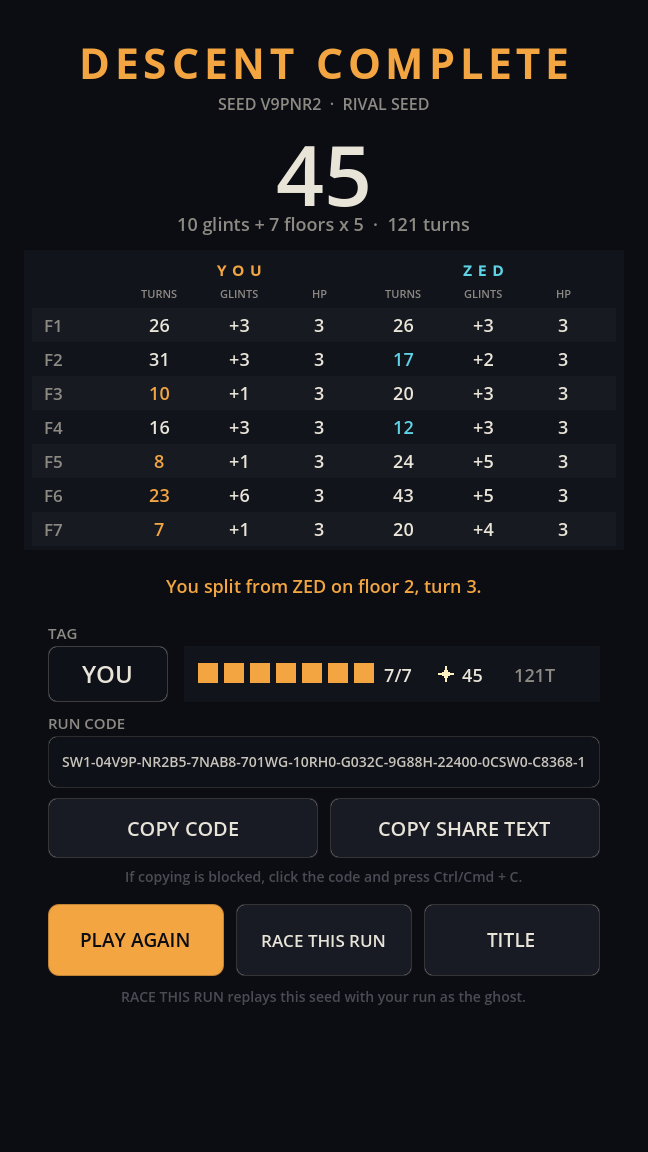
Every finished run ends with a run code, a short string such as SW1-04V9P-NR2B5-…, and a share line you can paste anywhere.
Paste someone's code on the title screen and Seedwake replays their run from scratch to check it. A code that has been edited, or that claims a score its moves did not earn, is refused. If it checks out, their seed loads and their run walks beside yours as a hollow cyan ghost: turn by turn, floor by floor, with the cells they just left trailing behind them. When they leave a floor you see the turn they left on; when they fell, you see where.
The moment your move differs from theirs, a fork marker is stamped on that cell. Until then the two runs were identical by construction, so that fork is the exact decision where your run and theirs became different games. The end screen shows both runs side by side, floor by floor, and names that turn.
No account, no server, no leaderboard: a seed and a list of moves are enough to rebuild a whole run.
Screenshots